
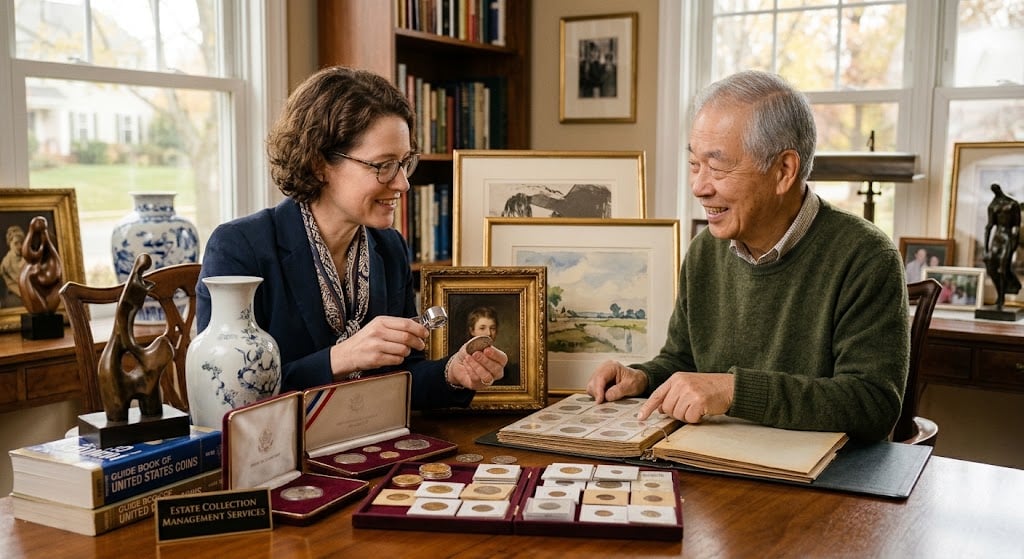
When seniors begin the process of downsizing—whether preparing for a move or simply simplifying their home—the goal is usually straightforward: declutter, streamline, and keep what is essential. But as closet doors open, attic boxes are brought down, and study drawers are cleared out, a common and fascinating discovery often occurs: the unexpected collection.
Decades of quiet collecting can accumulate far more value than anyone realized. A forgotten box in the attic might contain a well-preserved silver coin set, while framed artwork in the guest room could turn out to be signed, limited-edition prints or original pieces by notable artists.
If you or a loved one are downsizing and have uncovered an art, coin, or antique collection, here is a practical, step-by-step guide to evaluating, preserving, and managing these hidden treasures.
1. Pause and Handle with Care
Before sorting items into standard donation or haul-away piles, step back. Unidentified collections should be handled gently to preserve their value.
Coins and Currency: Never attempt to polish or clean old coins. Cleaning silver or copper coins with household polish or chemical cleaners can instantly strip away their natural patina and drastically reduce their numismatic (collector) value.
Art and Prints: Avoid touching canvas or paper art directly with bare hands. Store pieces upright in a dry, room-temperature area away from direct sunlight, moisture, or heat sources.
Stamps and Ephemera: Keep vintage stamps, postcards, or historic paper items flat and dry in archival folders or acid-free sleeves.
2. Take Inventory and Document Everything
Before reaching out to buyers or auction houses, create a basic catalog of what you have found. A simple spreadsheet or notebook works wonders.
Photograph Each Item: Capture high-resolution photos of the front, back, signature, makers' marks, or mint marks.
Note Details: Record any known history (provenance), purchase receipts, certificates of authenticity, or original boxes.
Identify Signatures & Markings: Use a magnifying glass or smartphone camera to zoom in on artist signatures, hallmarked silver stamps, or coin mint marks (e.g., "S", "D", or "O").
3. Seek Independent Professional Appraisals
One of the biggest mistakes families make during a downsize is accepting a quick cash offer from the first buyer who walks through the door. To ensure fair treatment:
Use Certified Appraisers: Look for professionals accredited by organizations like the Appraisers Association of America (AAA), the International Society of Appraisers (ISA), or the American Numismatic Association (ANA) for coins.
Separate Appraisal from Sale: Hire an appraiser who charges a flat fee or hourly rate for their evaluation rather than someone who buys the items themselves. This eliminates conflict of interest.
4. Who to Call in the DC, Maryland & Virginia Area
If you are downsizing in the local DMV region, working with established local specialists who understand the area's unique market for art, antiques, and fine collectibles is invaluable. Here are some of the most respected local companies to consider:
Local Auction Houses & Fine Art Specialists
Weschler’s Auctioneers & Appraisers (Rockville, MD): Operating locally right out of Rockville (and serving the D.C. metro area for over 130 years), Weschler's is a premier name for fine art, jewelry, rare collectibles, and estate liquidation. They operate strictly as a representative for consignors, meaning they never buy items directly, ensuring a completely unbiased, transparent evaluation and auction process.
Fine Art, Antique & Collection Appraisers
Washingtonian Appraisals (DC / MD / VA): Senior appraisers offering USPAP-certified, independent valuations for fine art, antiques, estate contents, and Asian art. Ideal for obtaining unbiased, formal appraisals before deciding to sell.
Peenstra Appraisals (Annapolis & DC Metro): Highly rated appraisal firm specializing in fine art, antique furniture, jewelry, and estate collectibles.
Harrison Appraisals: IRS-qualified and USPAP-compliant appraisers providing comprehensive valuations for high-end personal collections, fine art, and family heirlooms across the mid-Atlantic.
Premier Regional Auction Houses & Estate Liquidators
Quinn’s Auction Galleries (Falls Church, VA): One of Northern Virginia and D.C.'s premier auction houses, specializing in fine art, rare books, stamps, coins, and high-value estate liquidation.
Doyle DC / Mid-Atlantic (Washington, D.C.): The regional branch of the renowned national auction house, offering international buyer reach for high-end fine art, jewelry, coins, and rare decorative arts.
Four Sales Ltd. (Serving DC, MD & VA): A veteran regional estate sale and liquidation firm with over 50 years of experience managing complete estate sales, downsizing inventory, and targeted auctions.
Caring Transitions (Bethesda, Rockville & Washington DC): Excellent hands-on specialists who assist seniors with full senior move management, decluttering, online estate auctions, and liquidating collections simultaneously.
5. Decide on the Best Outcome
Once you know what the collection is worth, gather the family to decide on the best path forward:
Keep and Showcase: Select one or two favorite pieces to display in the new space as meaningful keepsakes, passing the story down through generations.
Pass Down to Heirlooms: Ask children or grandchildren if specific items hold personal significance for them.
Consign or Auction: For high-value art or rare coins, reputable regional or national auction houses can expose your items to serious collectors worldwide, ensuring competitive market pricing.
Donate for Tax Benefits: Fine art and historical collections can often be donated to local museums, universities, or charitable institutions for a potential tax deduction.
6. Enjoy the Peace of Mind
Downsizing isn't just about reducing physical possessions—it’s about clarity and intentionality. Discovering a long-forgotten collection is a wonderful reminder of a life well-lived, offering both financial opportunity and meaningful family memories.